




Let’s set the scene.
You crushed the call. Your champion loves you. The deck slapped. The demo sang. Steve, your buyer, is in.
And then…
Steve logs off.
He walks into a debrief you’re not invited to. A meeting full of people who didn’t see your pitch, didn’t ask for your solution, and don’t care how cool your platform is.
He’s about to pitch your product to people with more power, more opinions, and way less context. The deal is in his hands. And you’re not even in the room.
That’s where most B2B deals die. Not because the pitch was bad, but because you didn’t give Steve anything to help him win the next meeting.
Let’s fix that.
You’re Losing Deals in the Debrief
Nobody writes content for Steve to get a raise.
Poor Steve. He loves your product. He’s your internal champion. But he’s not the one signing the check, and he’s definitely not a professional salesperson.
And yet, we make him pitch it anyway. Tough luck, Steve. Go get us that deal signed.
Every day, deals die because Steve walks into a room of skeptical execs with nothing in his hand but a follow-up email and a vague sense of enthusiasm.
The real pitch doesn’t happen on your demo call. It happens when your champion has to resell your product — to their boss, their CFO, and their procurement team — without you in the room.
No deck.
No demo.
No sales rep to rescue them.
And that’s the moment you realize: your content was never designed to win that meeting.
The Real Job of Advocacy Enablement Content
Let’s call it what it is:
Most content stops at the first “yes.”
We craft landing pages to convert. Decks to dazzle. Case studies to convince. But none of it is built for what happens after the first yes, when your buyer needs to convince everyone else.
That’s where advocacy enablement content comes in. This isn’t brand awareness. It’s not demand gen. It’s not for the algorithm. This is content built exclusively to help your champion resell your solution internally. It’s surgical. Purpose-built. Deal-critical.
You’re not creating for clicks. You’re creating for internal conviction. To preempt objections, simplify the pitch, and make your buyer feel less alone when they walk into that room.
Because let’s be honest:
Most buyers aren’t equipped to fight for budget, shift priorities, and win over a skeptical exec team, especially when the stakes (and the politics) are high.
And if you don’t give them content that helps them do that? You’re handing your deal to the void.
Who’s in the Room?
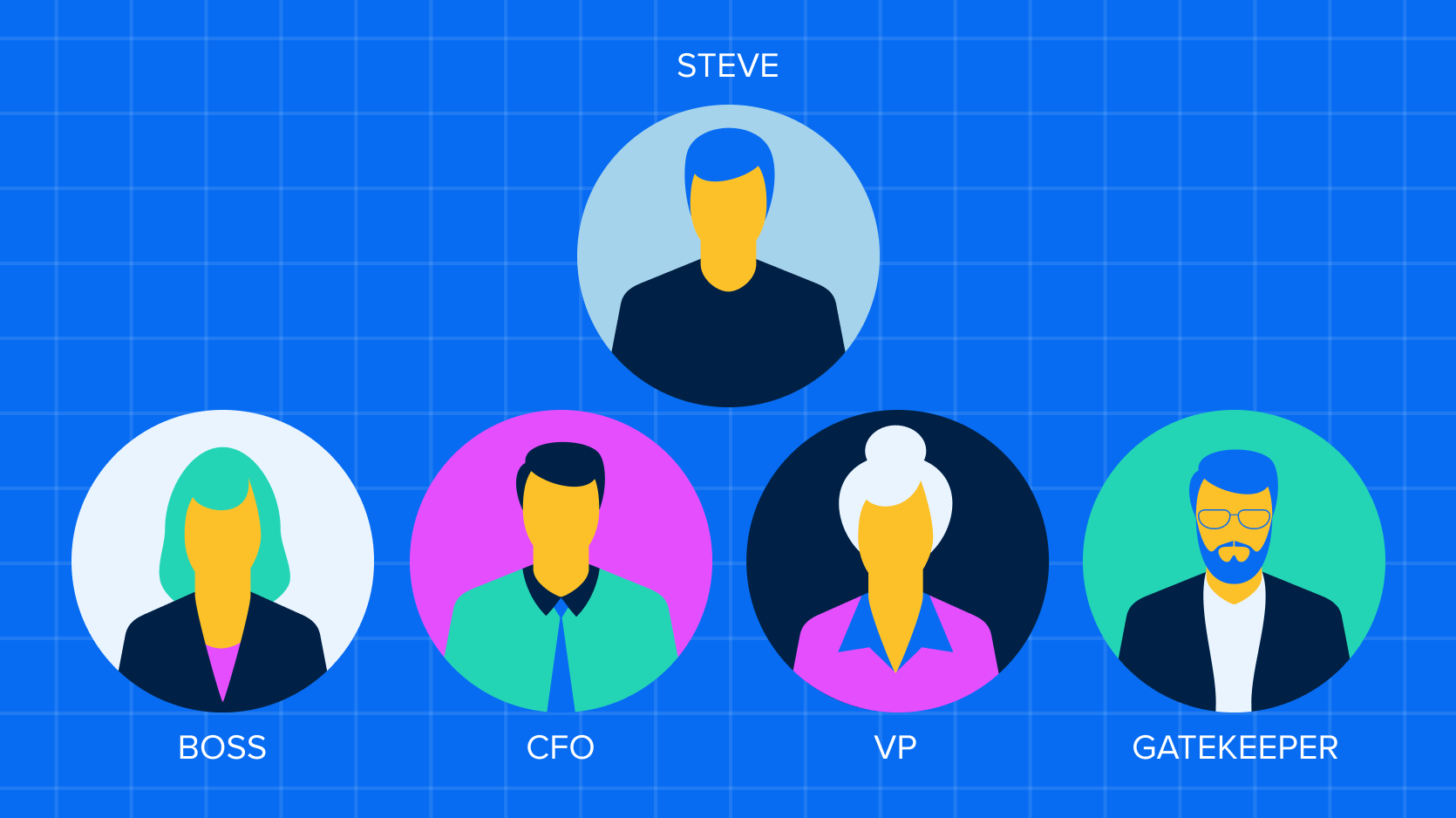
Let’s meet the cast of characters Steve’s up against:
🧓 The Skeptical Boss
Might be a manager, director, maybe even a VP or C-suite exec. Hears “new software” and immediately thinks “new headache.” He’s seen too many tools flame out and doesn’t want to stick his neck out.
📊 The CFO Who Only Speaks Excel
Steve could be pitching a rocket ship — she only wants to know what line item gets cut to pay for it.
🧥 The VP Who’s Still Mad About the Last Failed Vendor
Burned once, twice as bitter. This isn’t about your product; it’s about their trauma. This happens to be the hardest person in the room to win over. Will act primarily off emotion. This is where your brand messaging needs to be as strong as their past hurt. In other words, it needs to make them feel something for them to even consider your product.
🛡️ The Gatekeeper Who Thinks This Is a Waste of Time
They’re not even listening. They’re just waiting for a reason to say no.
None of these people saw your beautiful demo. They didn’t feel the momentum in the sales call. They’re not sold. They’re suspicious. And that’s the room and the climate in which your deal has to survive.
And if Steve doesn’t have the content to back him up (to address their concerns, not just his enthusiasm) the deal dies right there.
What Great Advocacy Enablement Content Looks Like
You don’t need a 32-page pitch deck. You need a 1-pager Steve can forward without sweating.
Advocacy enablement content is not flashy. It’s not built for engagement metrics. It’s built to survive the meeting you’re not in.
Here’s what actually works:
1-Page Impact Summaries
Show the “why now,” “why us,” and “what’s the payoff” in one scrollable sheet. Emphasize clarity over cleverness.
Budget Justification Breakdowns
A dead-simple breakdown of cost vs. return. Think: “Here’s how we pay for ourselves in Q2.”
Use Case Walkthroughs
Show how the product solves their problems. Not just generically, but mapped to real workflows or pain points inside their org.
Comparison Charts (Especially vs. Doing Nothing)
Spell out the cost of inaction. “Status quo” is your biggest competitor, so make that pain obvious.
Internal-Ready Pitch Decks
These aren’t just recycled sales decks. They’re stripped-down, non-salesy versions with internal trust signals, emotional permission, and risk-calming framing.
Great advocacy content doesn’t just inform. It reassures.
Excellent advocacy content validates the decision your buyer already made in their head, and makes it safe to bring others along. Because the best-case scenario? Steve becomes the hero of the meeting, not the guy who brought in another shiny tool to die in backlog purgatory.
The Next Meeting is the Real Battleground
Most B2B brands stop selling too early. They get the first yes and exhale.
But the real decision? That happens later. In a meeting you’re not invited to.
That’s where your deal will either move forward or fall apart. Not because your champion didn’t love you. But because they didn’t have the right tools to fight for you.
Advocacy enablement content is how you win the meeting you’re not in. It’s not flashy. It’s not optimized for search. But it’s the most important content you’ll never see in action because it’s doing your job when you can’t.
And if you don’t make it?
Someone else will.